
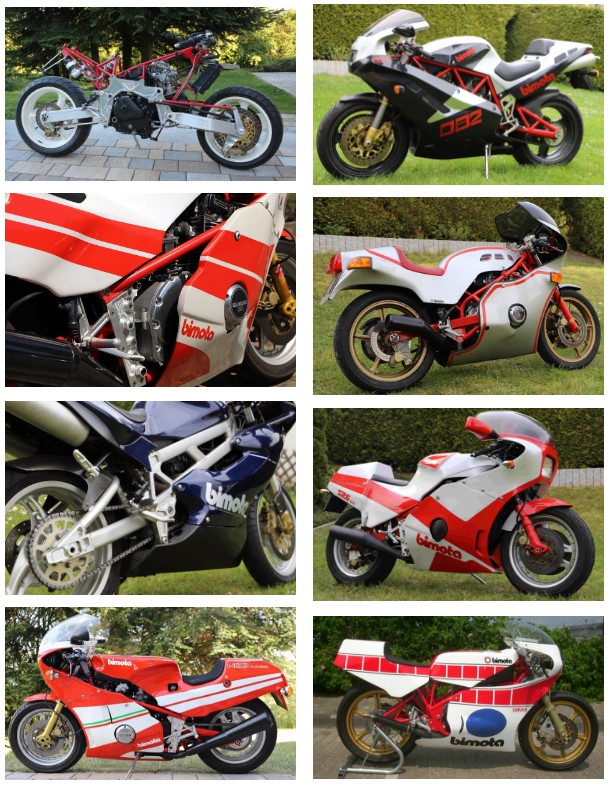
In the first half of the 1980s, Bimota primarily used telescopic forks from Forcelle Italia, an Italian specialist for motorcycle forks and chassis components. The models produced during this period—KB2, HB2, HB3, KB3, SB4, and SB5—were delivered from the factory with 40 mm Endurance forks featuring seven-way adjustable damping. The stanchions of these racing-oriented forks are made from a magnesium alloy and come with quick-release axle clamps equipped with folding pinch arms. This fork was also available with adjustable rebound and compression damping, identifiable by the additional valves installed in the fork feet.
The fork seals sit in a threaded cap that can be easily removed upward once the fork leg is taken out. A clever construction that allows quick and simple replacement of the sealing rings. Only a hook wrench is required to loosen the cap. The sealing ring can be pushed out, for example, with a 32 mm socket.
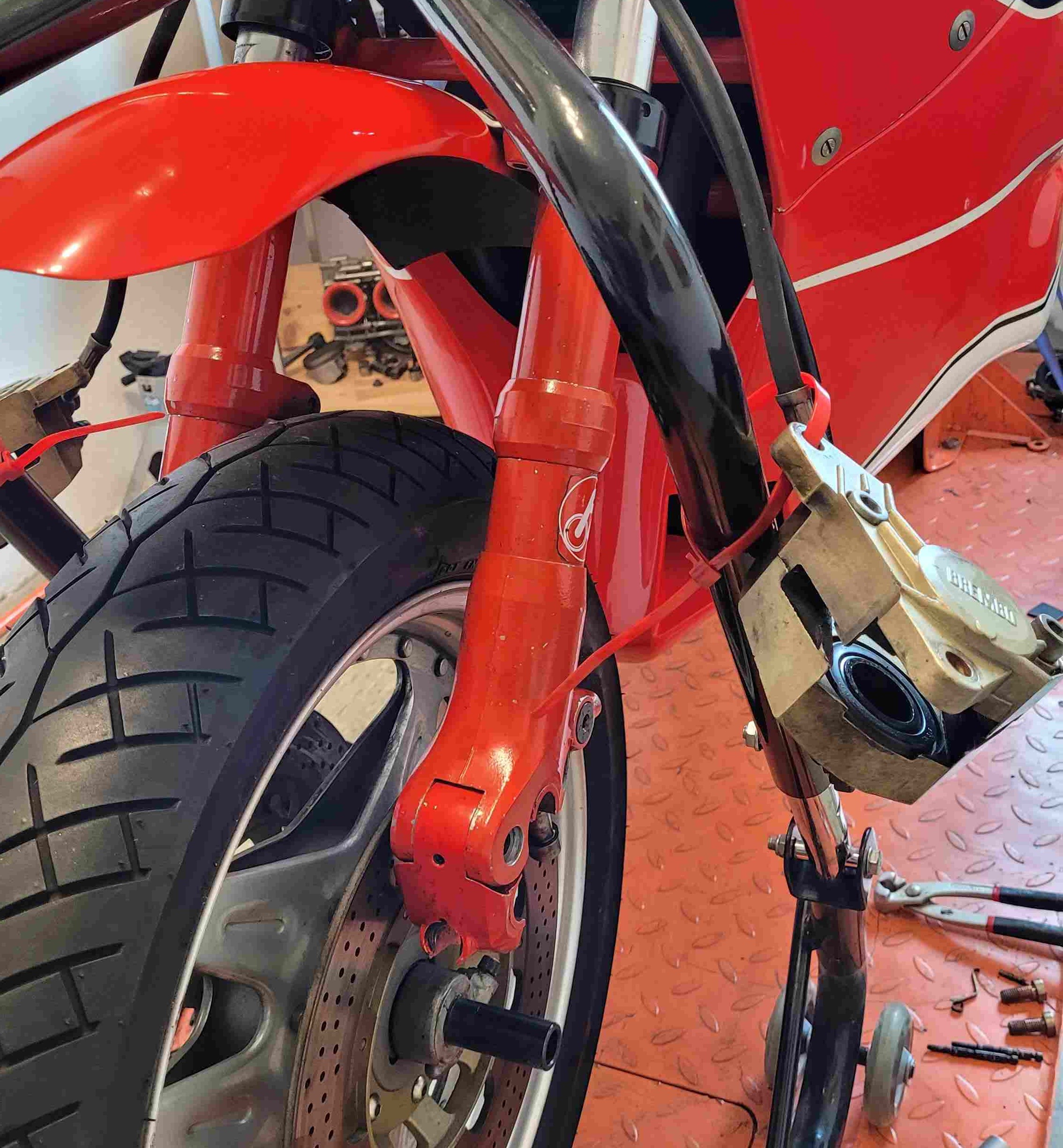
On this KB2, the fairing didn’t even need to be removed. Loosen the front axle, unbolt the brake caliper, position the fork lift, remove the front wheel, loosen the clamps on the triple trees, and pull out the fork legs – done.
As simple as the disassembly is, finding suitable replacements for the worn or hardened fork seals is more difficult. The original seals are one-piece units with an integrated dust lip. Even after extensive online research, nothing suitable can be found—only a few forum posts from people who encountered the same issue.
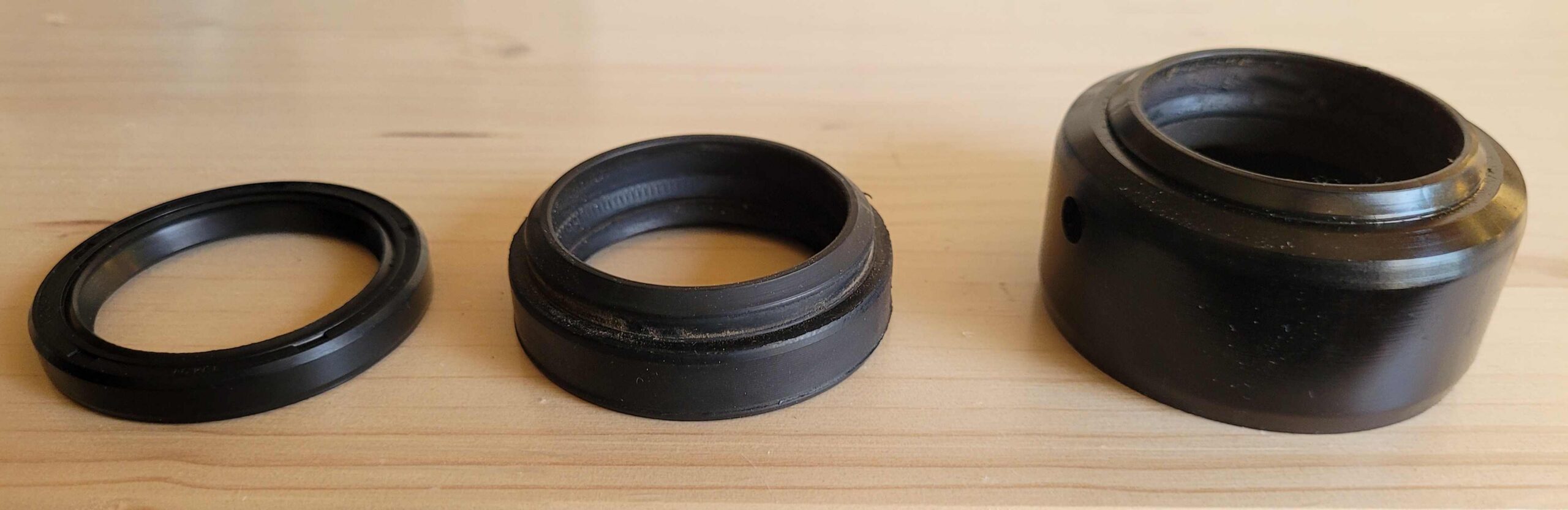
Some fellow Bimota mechanics have even had new threaded caps made to allow the use of 40 × 10 seals and dust caps. My tip: install two 40 × 7.5 seals on top of each other. At 15 mm, they are slightly taller than the original, but the thread of the screw cap is long enough to secure them safely.
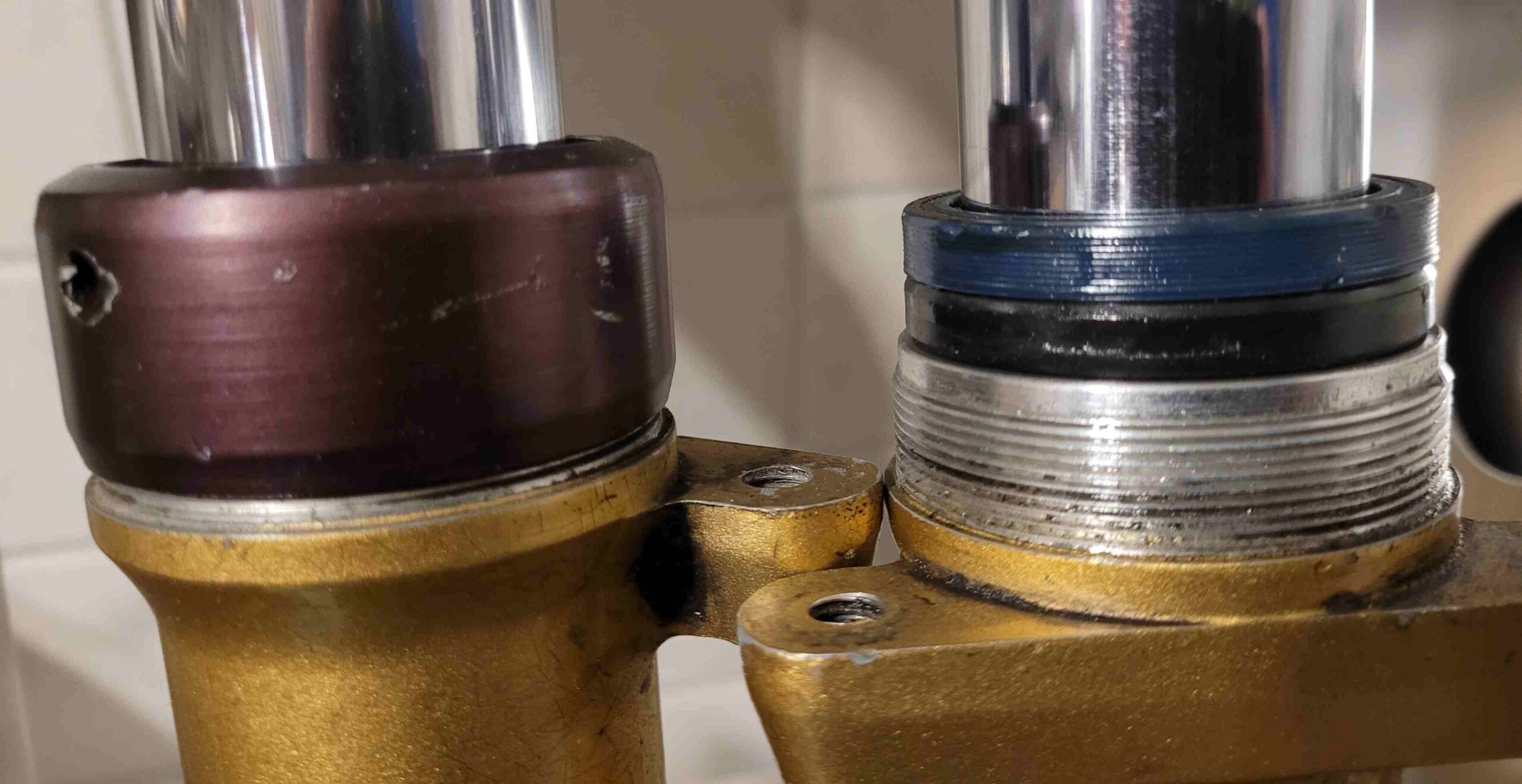
The missing dust cap is, of course, not ideal, as dirt can accumulate on the upper seal. The only remedy here is regular cleaning.