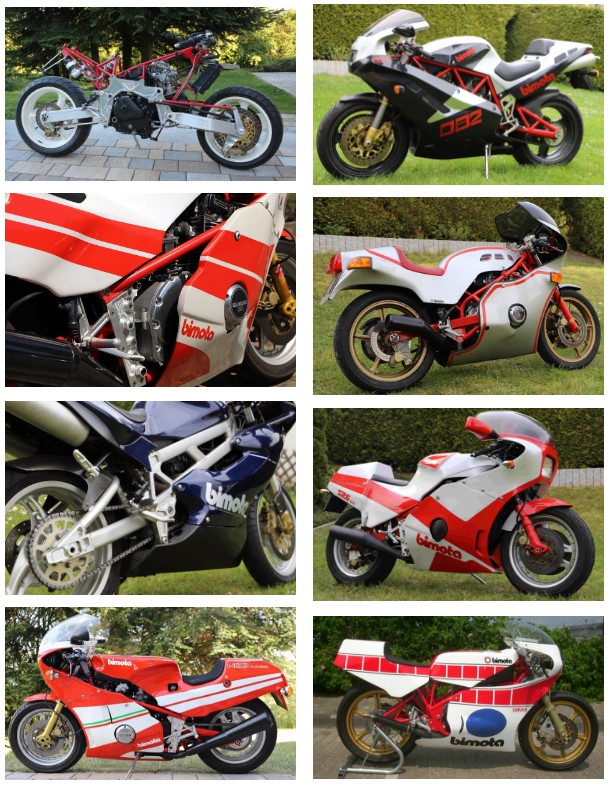
This is the first Alpine tour for which I didn’t travel, as usual, by car and trailer, but instead used public transportation. And I didn’t set off from the Weserbergland this time, but from the Dolomites. The reason was a leaking float needle valve, which caused my YB8 to break down during the first part of the tour in the small Italian village of La Villa in the Gadertal (you can read about it here: YB8 E 2nd Alpine Tour 2023).
For the first time, it paid off that I had brought two motorcycles for the tour. Between the breakdown in the Dolomites and continuing the trip in the Allgäu, there was only a day’s journey by public transport. Although, for just over 300 kilometers by road, that’s quite a long trip. But it was varied: the first hour by bus to the train station, then by train to the Brenner Pass, switching to a bus due to track construction, back on the train to Innsbruck, changing again, and so on.
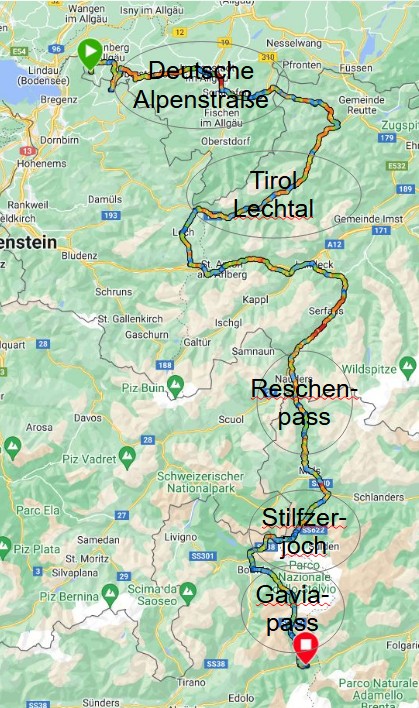
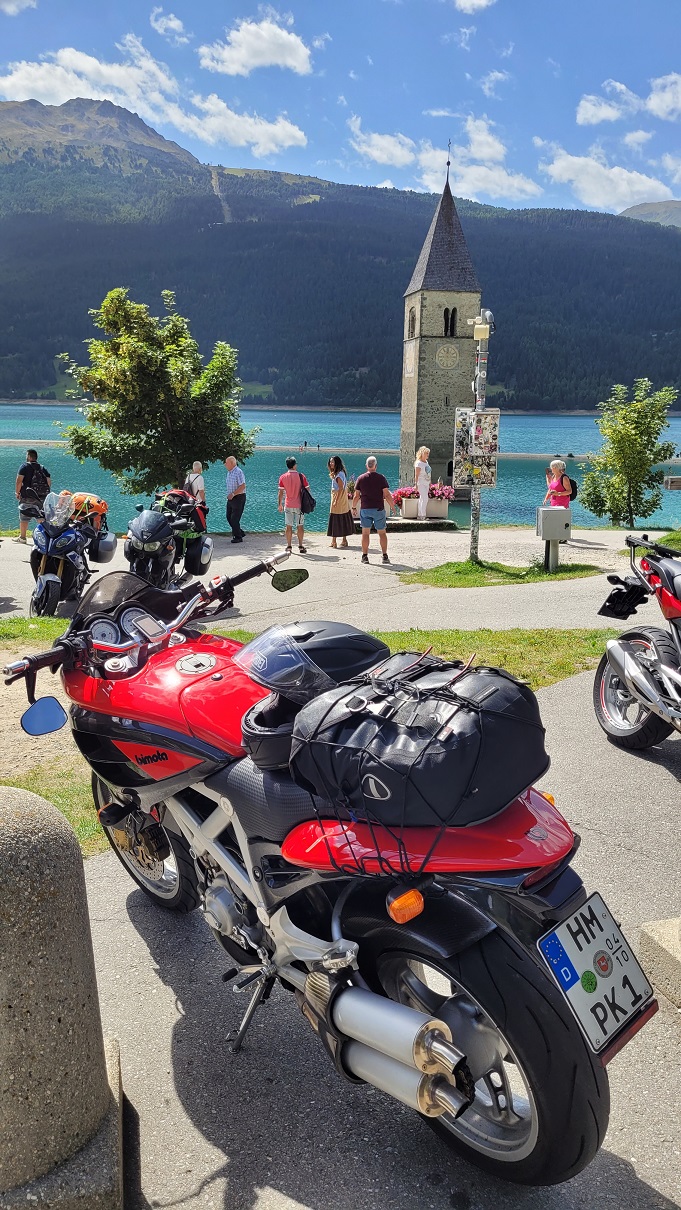
The following morning, I unload my DB3 from the trailer, strap the luggage bag onto the pillion seat, and set off toward the Reschen Pass. Given the forecast—heavy thunderstorms over the next few days followed by a sharp drop in temperatures—the trip will likely turn into just a short two-day outing.
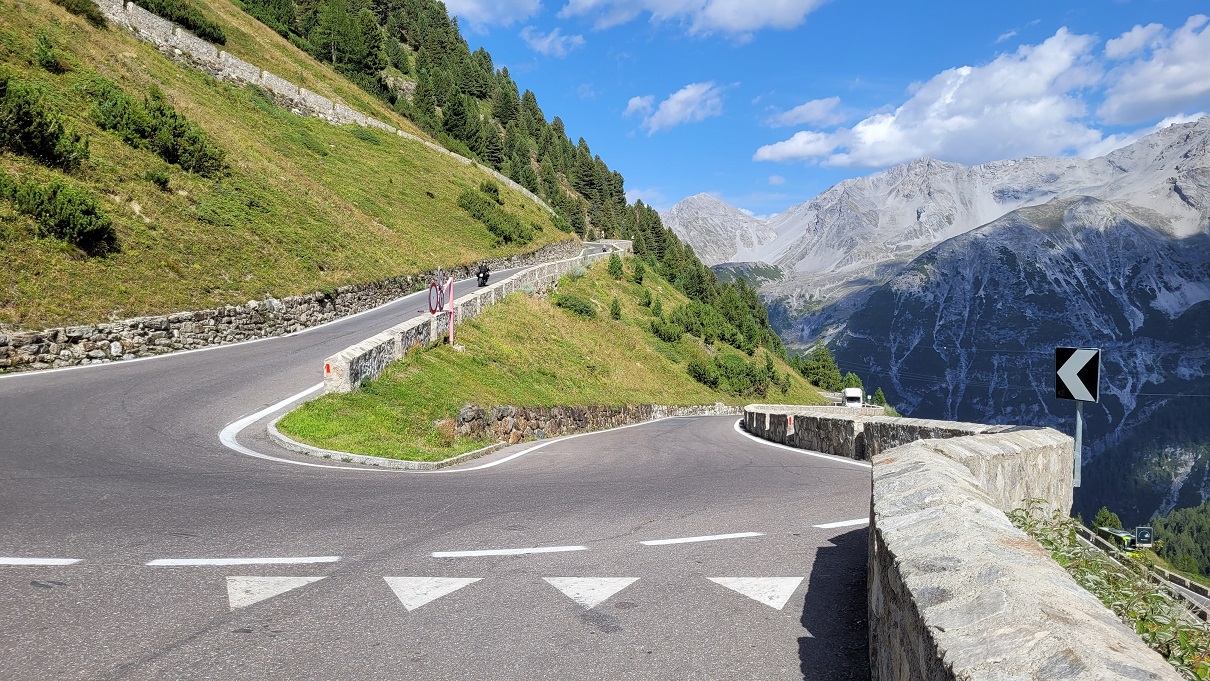
By the afternoon, I reach the eastern side of the Stelvio Pass, which I wasn’t able to ride last year because of bad weather. After the Col d’Isère, at 2,757 meters it is the second-highest paved mountain pass in the Alps and features 87 hairpin bends over a distance of around 50 kilometers. Some of the switchbacks are extremely tight, making smooth cornering almost impossible, but this masterpiece of road engineering is simply something you have to ride at least once.
On the other side in Bormio, I plan the rest of the day. There’s still enough time for the 2,618-meter-high Gavia Pass, which leads from Bormio into Val di Sole. On its southern side, in Ponte di Legno, I book a hotel. In the evening, I look at the many options for the return journey to the Allgäu and decide on a route that crosses eight varied mountain passes and promises plenty of winding-road fun.
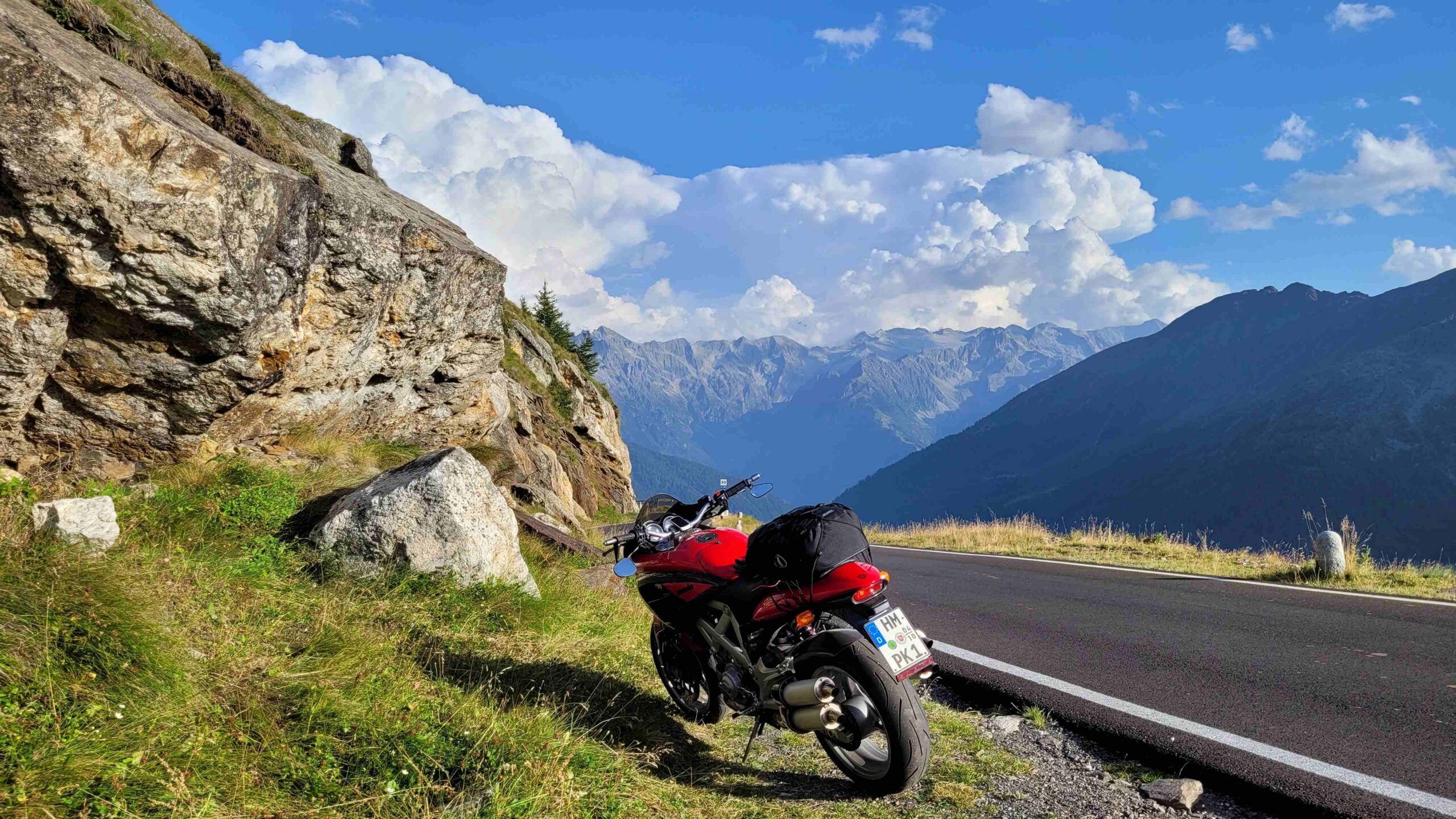
From Val di Sole, the route climbs over the 1,852-meter-high Passo Mortirolo into the Adda Valley. Then it continues over the Passo di Fosscagno (2,291 m) and the Passo d’Eira (2,208 m) through the Italian Alps to Livigno, and from there to the Swiss border at the Forcola di Livigno (2,315 m). In Switzerland, four more passes with perfect road surfaces await.
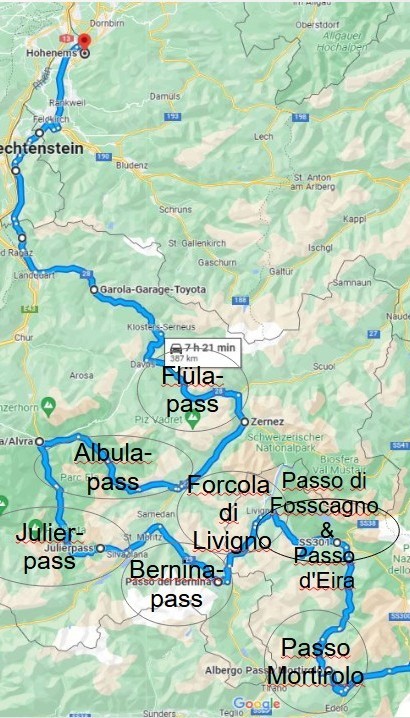
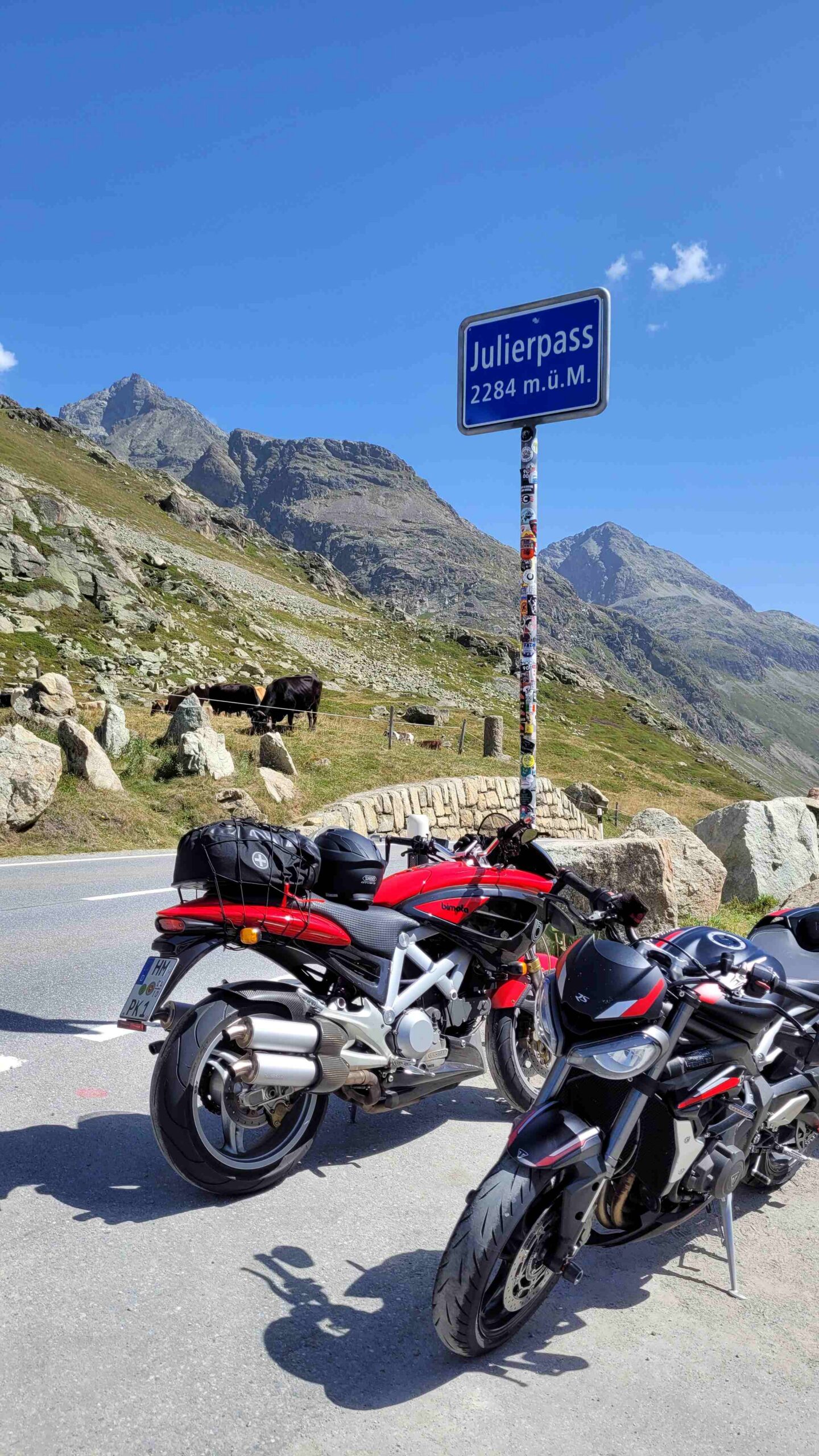
From the Bernina Pass (2,323 m), I descend to St. Moritz and then immediately climb again over the scenically impressive Julier Pass (2,284 m). From Albula, it’s only just under 150 kilometers back to the Allgäu by the most direct route, but I still have plenty of time before the forecast storms arrive to enjoy the magnificent Albula Pass (2,315 m), which leads back into the Inn Valley about ten kilometers north of St. Moritz.
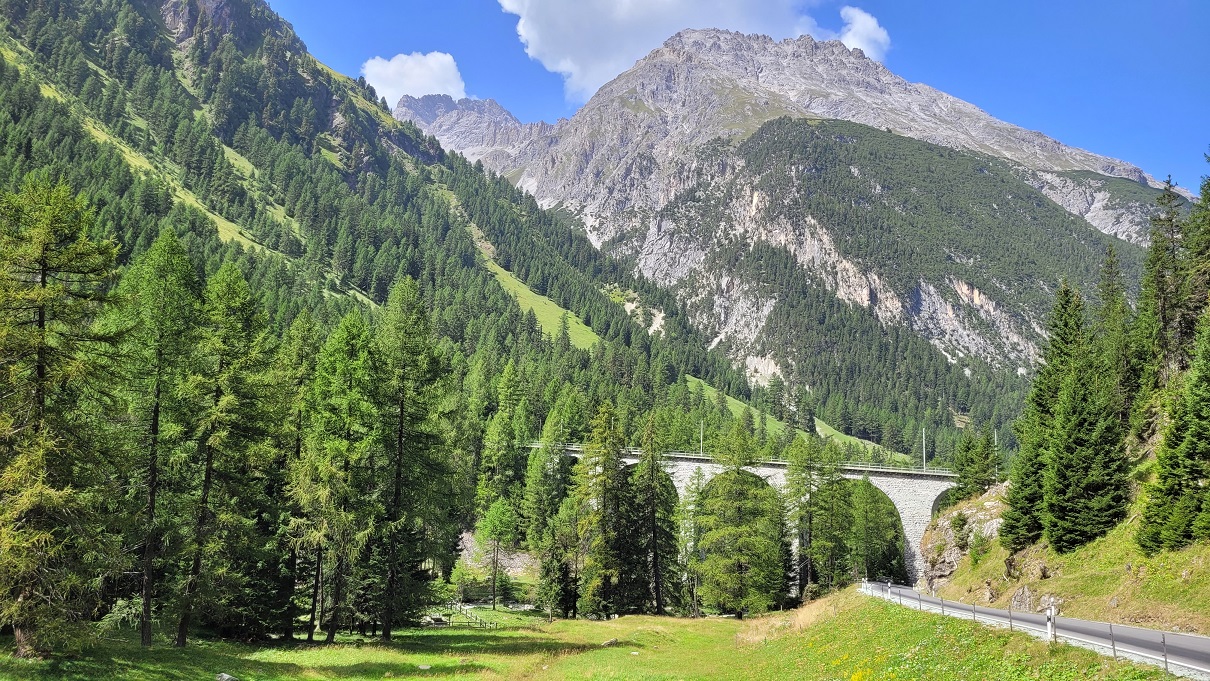
After 26 kilometers along the River Inn, the road branches off in Susch over the Flüela Pass (2,383 m) toward Davos. From there, it’s about another 40 kilometers down to Landquart in the Rhine Valley. Following the Rhine, I continue through Liechtenstein, on to Feldkirch in Austria, and then back to the Allgäu …
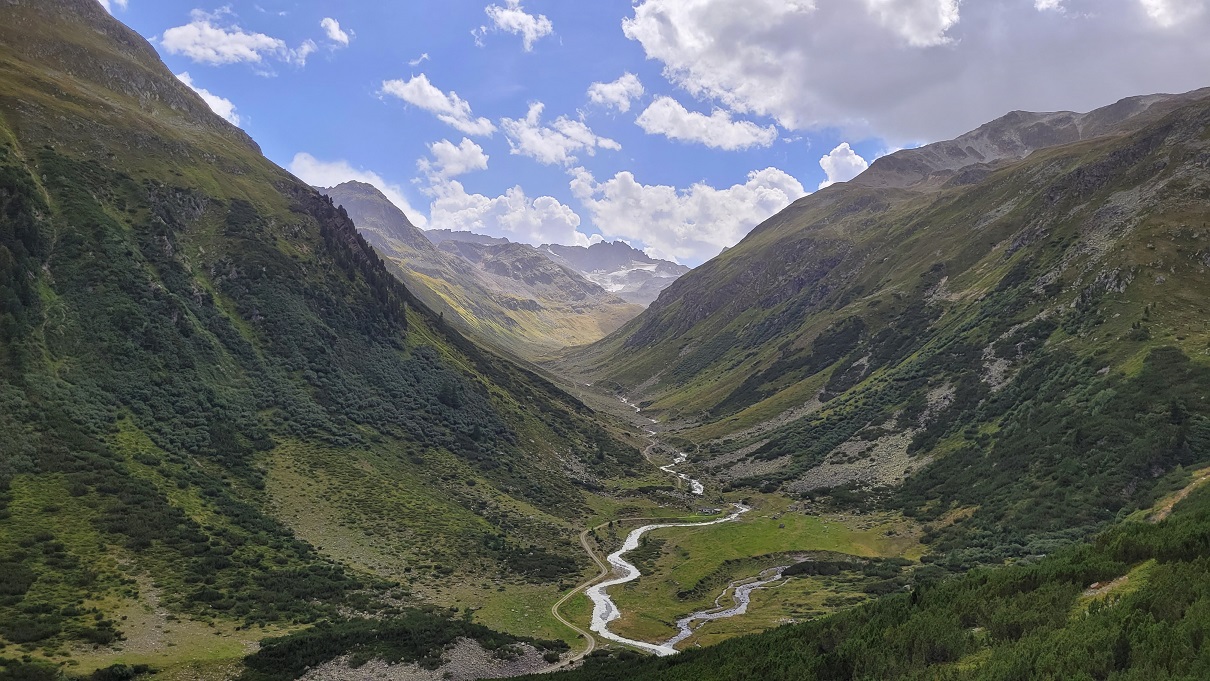
Around 300 kilometers and eight breathtaking Alpine passes lie behind me, with another good 100 kilometers to the Allgäu still ahead. Behind Davos, on the way down into the Rhine Valley, I notice that the warning lights in the cockpit are growing dimmer and dimmer. Not a good sign! Shortly afterward, the motorcycle dies.
This can’t be happening! Another breakdown!
With my last bit of momentum, I roll off the main road into a commercial area and come to a stop just short of an auto repair shop. The owner immediately takes care of me, lets me push my DB3 into the workshop, and comes to help with a portable jump-start power pack. The bike starts right up. However, the connected multimeter shows that the battery isn’t charging.
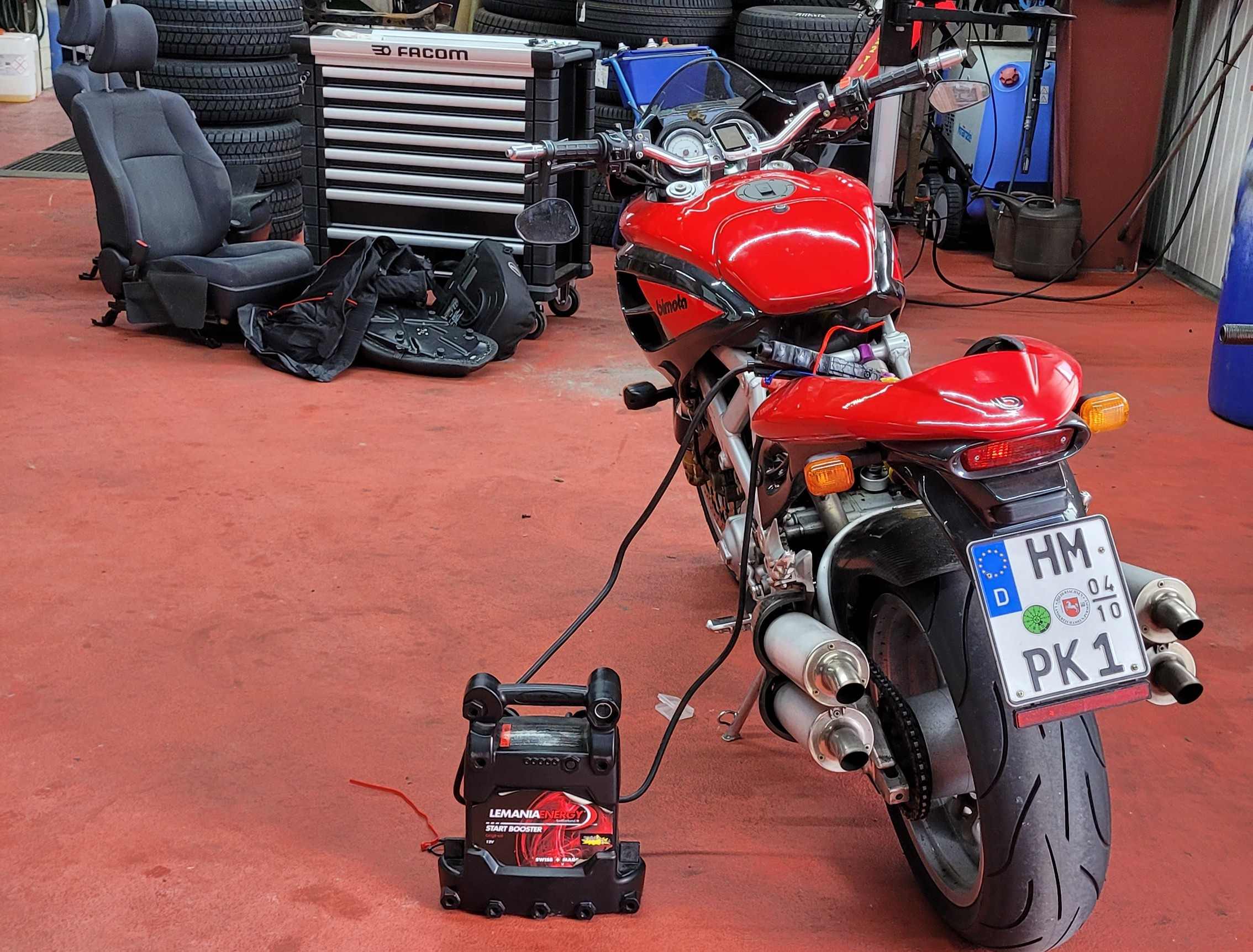
I borrow a pair of side cutters and snip a few cable ties so I can check the wiring under the rear subframe for any damage. Nothing. Most likely the voltage regulator is defective. The workshop owner also has an idea regarding a spare part: just 12 kilometers away there’s an authorized Ducati dealer. The phone number is quickly found. Unfortunately, they don’t have a suitable regulator in stock. Even if ordered, it wouldn’t arrive before the beginning of next week at best.
That doesn’t really help my situation. I decide to charge the battery with the power pack and then see how far I can get. Unfortunately, there’s no information on the device about the charging current, so I can’t even estimate how quickly the batteries are charging. So—trial and error. To save power for starting, I use the power pack to start the bike, disconnect it only afterward, reinstall the seat, and strap down the luggage. With thanks to my helper, I set off on this test ride—without lights—toward the Allgäu.
After exactly 36 kilometers, despite riding without lights, the battery is flat again and the engine dies once more. With the clutch pulled in, I roll onto a gas station in Triesen, Liechtenstein. Behind the station is a workshop—and another power pack. If all goes well, that should be enough for the next 30 kilometers or so. Allgäu, here I come. While charging, I think about other ways to reduce power consumption. One option is the brake light, which draws 21 watts. If I disconnect the cable from the rear brake light switch, I can brake—when safe to do so—without consuming electricity. In any case, during harder braking I use the front brake, and then following traffic will see that.
But now it’s rush hour in Liechtenstein and I can barely make progress. In dense stop-and-go traffic with lots of traffic lights, I manage only about 20 kilometers before the next power failure. This time I roll to a stop 200 meters before the Liechtenstein Audi dealership. Once again, people are incredibly willing to help a stranded motorcyclist. The now familiar routine follows.
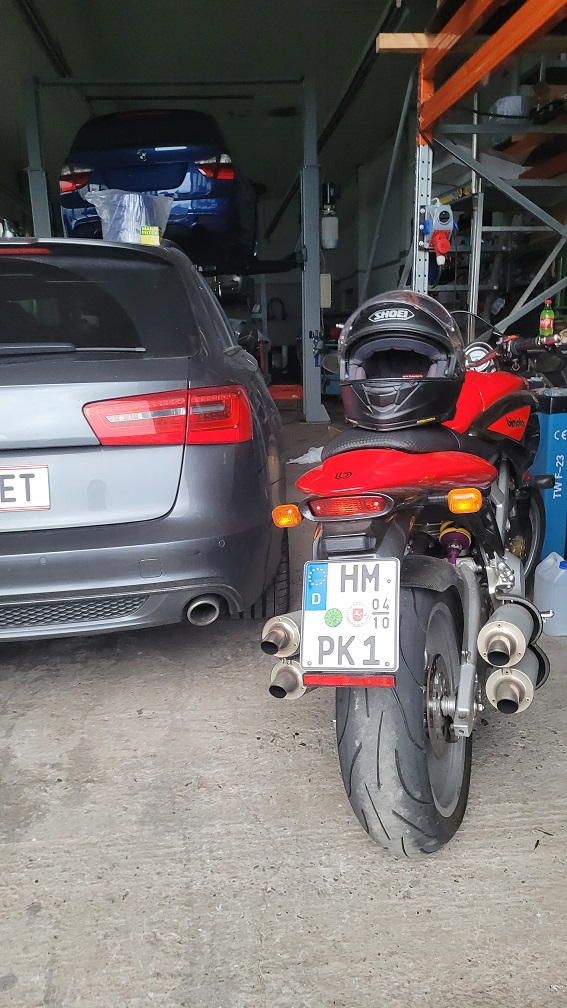
After 20 minutes of charging, I set off again. I weave right and left through the sluggish city traffic of Vaduz and Dornbirn. This way I manage another 30 kilometers to Götzis, where I break down right in the middle of town.
By now it’s 6:30 p.m. and all the workshops are closed. So I search Google Maps for the nearest gas station. At the edge of town, just under 500 meters away, there’s a BP station. I take off my jacket and lay it on the luggage, hang my helmet on the handlebar, and start pushing the motorcycle in over 30°C heat and high humidity from the approaching thunderstorm. Fortunately, after about 200 meters the road slopes slightly downhill. I can hop on and roll down to the station. As I park the bike, a woman in a Golf pulls up beside me and tells me I’ve lost my jacket. It’s lying about 150 meters back on the road!
Well, it’s not supposed to get boring. I walk back up the hill and see a silver VW T5 that has stopped next to my jacket lying at the roadside. The driver gets out and picks it up. When I reach him, he asks what happened. Once again, I meet a helpful person who immediately offers to fetch jumper cables from home. “Motorcyclists help each other,” he says as he gets back into his van to get the cables.
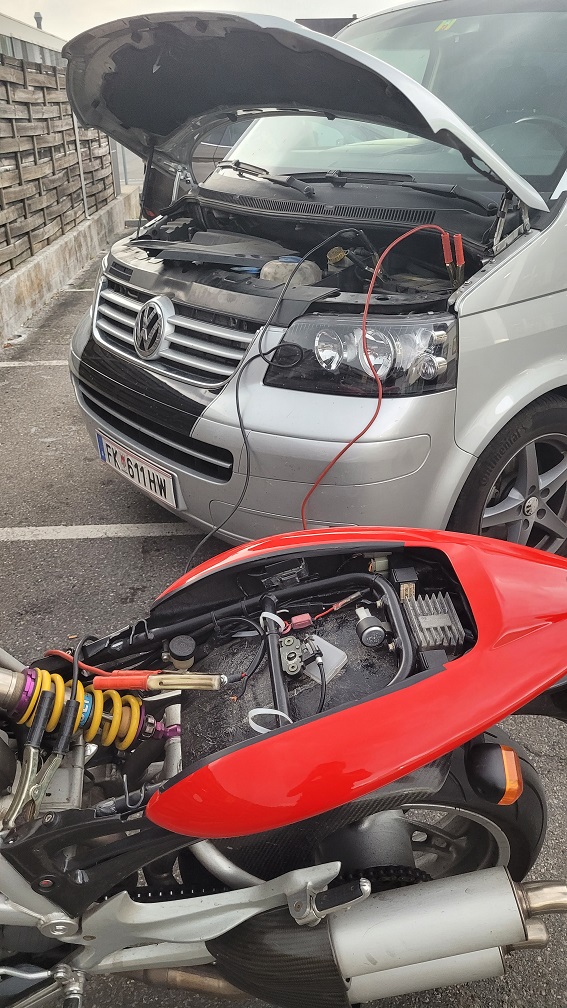
I return to the gas station, buy myself an ice cream, unstrap the luggage, and wait for his return. Just before 7 p.m., Patrick is back. He parks his T5 in front of my Bimota and steps out with the jumper cables in hand. I remove the seat, Patrick opens the hood, and we connect the stricken DB3 to the van’s battery. Another charging session. With a bit of luck, the last one—or at least the second to last—since there are still 41 kilometers to go.
Because nothing had happened for a while, a heavy thunderstorm is now approaching from the southwest, and it’s getting quite dark. Sunset isn’t until shortly after 8 p.m., but with these visibility conditions, continuing without lights would be pretty risky. I tell Patrick that, given the weather, it’s probably better to abandon my ride in charging stages.
Patrick’s reaction is incredible. He asks whether I can manage another five kilometers with the current battery charge and offers to store the DB3 in his workshop in Hohenems. And that’s not all—he would then drive me back to the Allgäu himself. What an offer. Despite all the setbacks, I’d still make it home that evening and could pick up my motorcycle with a trailer the next morning.
As the rain begins, I follow Patrick’s T5—without lights and wearing only a T-shirt in the warm, humid storm air—to his workshop in Hohenems. With perfect timing, the heavy rain starts the very moment I roll the DB3 through the workshop door. Before heading to the Allgäu, we take a look at the many motorcycles and cars that Patrick and his friends keep in the large hall, and we talk shop about, among other things, his new Ducati Streetfighter V4 SP with 208 hp.
The next day everything runs smoothly again. After breakfast, I pack my things, drive back to Hohenems with the trailer, load up the DB3, and head home. Once there, I order a new regulator. Installation is quick—but unfortunately it doesn’t solve the problem. Still no charging voltage. So is it the generator after all? I measure the AC voltage between the terminals at the output—nothing! As a last attempt before removing the alternator, I check the cables that are only accessible after removing the tank—which, on the DB3, involves quite a bit of work. Instruments off, handlebars off, fuel lines, and so on…
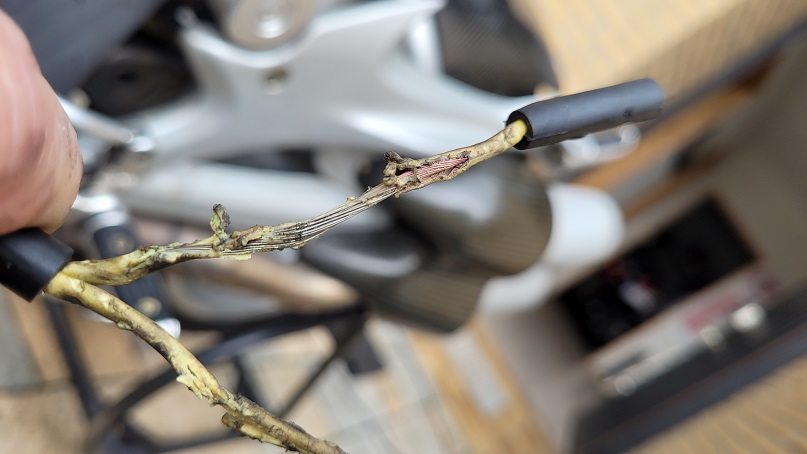
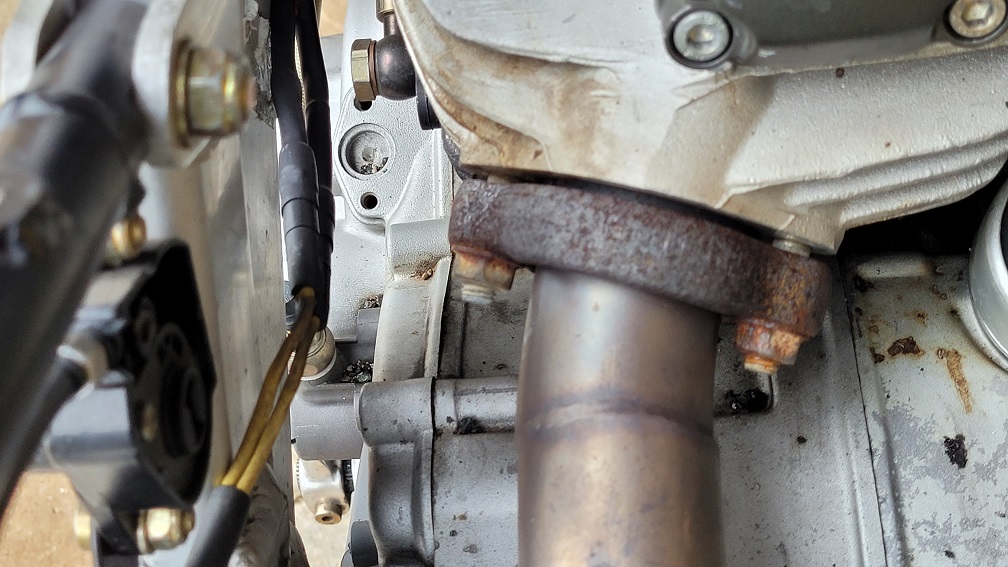
And indeed, the cause of the breakdown turns out to be a melted cable running from the generator to the voltage regulator. It runs along the inside of the frame just a few centimeters from the rear cylinder and the exhaust header. Most likely both its age and the strain of riding eight mountain passes in one go finished the material off. However, the real cause is the less-than-ideal factory routing. So here’s my advice to anyone planning to tackle eight passes in a row on a DB3: reroute those cables beforehand. How? You can read about it here.